letter
The letter is the pivotal object in Fyodor Dostoevsky's "White Nights," functioning as the narrative's emotional and structural climax. It is the tangible expression of Nastenka's inner conflict, her hope, her despair, and her final choice, and its arrival shatters the Dreamer's brief illusion of happiness, crystallizing the story's central theme of unattainable love and the bittersweet value of a single moment of bliss.
Origin and Purpose
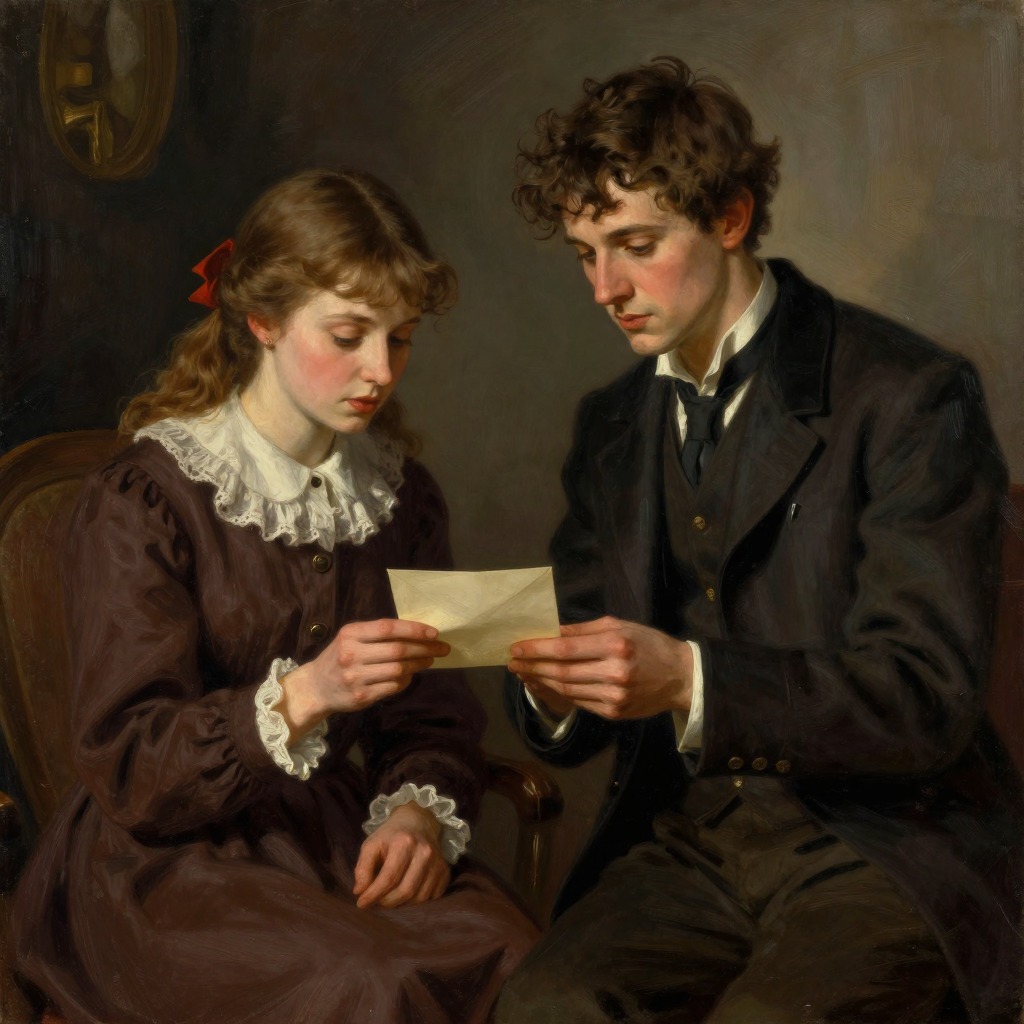
The letter originates from Nastenka's desperate need to communicate with her absent lover, the Lodger, who had promised to return to her after a year in Moscow. After three days of waiting without any sign or word from him, Nastenka, in a state of profound distress, confesses to the Dreamer that she has already written the letter. She reveals it was prepared long before, sealed and ready, and she had been carrying it with her. The Dreamer, upon learning this, helps her refine its contents, suggesting a draft that begins with "Dear Sir" and expresses her impatience and her willingness to forgive him if he has changed his mind. Nastenka, delighted, declares, "Oh, you have solved my difficulties: God has sent you to me!" The letter is then entrusted to the Dreamer, who is to deliver it to the kind people who can forward it to the Lodger.
The Letter's Content and Emotional Weight
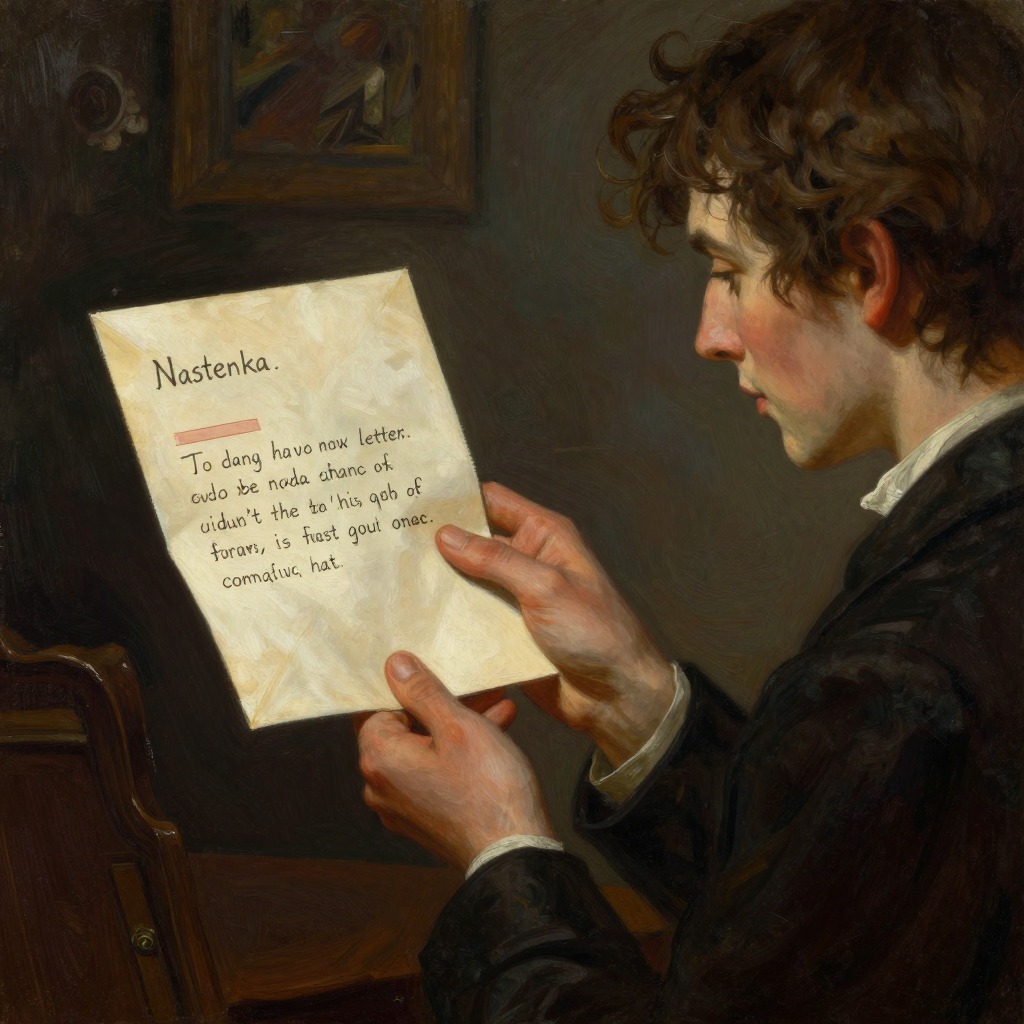
The letter itself, as later revealed in the story's final section, is a complex document of love, apology, and farewell. In it, Nastenka begs the Dreamer for forgiveness, confessing that she deceived both him and herself: "It was a dream, a mirage." She insists she has not changed toward him, that she loves him, but adds the heartbreaking caveat, "Oh, if only I could love you both at once! Oh, if only you were he!" The letter then transitions into a declaration of eternal gratitude for the Dreamer's love, which she promises to treasure as "a sweet dream which lingers long after awakening." She asks him to remain a friend and brother, and announces that she is to be married to the Lodger the following week. The letter is signed simply, "NASTENKA."
The Letter's Role in the Climax
The letter's arrival is the story's turning point. After the Dreamer has confessed his love to Nastenka and she has seemingly accepted him, planning their future together, the Lodger suddenly appears. Nastenka immediately rushes to him, and after giving the Dreamer a farewell kiss, she departs with her former lover. The following morning, the Dreamer receives the letter from the postman. He reads it over and over, tears streaming down his face. The letter confirms that Nastenka's heart has always belonged to the Lodger, and that her brief affection for the Dreamer was a product of her own pain and gratitude. It is the final, crushing blow to the Dreamer's hopes, leaving him alone in his dingy room, contemplating a future of solitary misery.
Thematic Significance
The letter embodies the story's central themes of illusion versus reality and the transience of happiness. It is a physical object that carries the weight of Nastenka's emotional truth, a truth that the Dreamer had momentarily allowed himself to believe was otherwise. The letter's contents—its apologies, its gratitude, its finality—underscore the Dreamer's role as a passive recipient of happiness rather than an active participant in it. The letter also highlights the power of written communication to convey complex emotions that spoken words cannot, and it serves as a permanent record of a fleeting moment of connection that is now irrevocably lost. The Dreamer's final blessing, "May your sky be clear, may your sweet smile be bright and untroubled, and may you be blessed for that moment of blissful happiness which you gave to another, lonely and grateful heart!" is a direct response to the letter's plea for forgiveness, transforming the object of rejection into a source of enduring, if painful, gratitude.